A prospective patient requests information about Botox, body contouring, laser treatments, or another aesthetic service. Your team intends to respond, but the inquiry arrives during a treatment, after business hours, or in the middle of a busy front-desk shift. By the time someone follows up, the prospect may have contacted another clinic.
Med spa lead nurturing automation closes this response gap. It combines immediate acknowledgment, structured follow-up, consultation booking, reminders, and staff alerts in one repeatable system. The objective is not to replace personal service. It is to make sure every qualified inquiry receives timely attention while your team focuses on patients.
What Is Med Spa Lead Nurturing Automation?
Med spa lead nurturing automation is a connected workflow that guides an inquiry from initial contact to a booked consultation. It can capture leads from website forms, paid advertisements, social media campaigns, phone calls, chat, and referral pages. The system then records the lead in a CRM, sends an appropriate first response, creates follow-up tasks, and tracks whether the person books.
A strong workflow also identifies when human help is needed. Questions about candidacy, medical history, treatment recommendations, complications, or pricing exceptions should be routed to trained staff rather than answered with generic automation. A connected Medspa automation system should support the patient experience while giving your team clear visibility into every conversation.
Why Med Spa Lead Follow Up Often Breaks Down
Most lead loss is not caused by a lack of demand. It happens because follow-up depends on memory, disconnected inboxes, or a single front-desk employee. Common breakdowns include delayed responses, inconsistent messaging, unanswered missed calls, and leads receiving only one follow-up attempt.
Another problem is context. A person asking about lip filler should not receive the same consultation nurture sequence as someone researching laser hair removal. Even when both need a consultation, their questions, concerns, decision timelines, and next steps may differ. Effective automation keeps the process consistent without making every conversation identical.
A Practical Med Spa Lead Nurturing Automation Workflow
The right sequence depends on your services, sales process, and communication permissions. However, most aesthetic clinics can build around the following stages.
1. Capture and Categorize the Inquiry
Start by sending every inquiry into one CRM instead of leaving leads scattered across email, social media, spreadsheets, and individual phones. Record useful details such as the requested treatment, lead source, preferred contact method, location, and whether the person is new or returning.
Keep forms short enough to complete. You can collect additional information later, and sensitive medical details should only be gathered through systems and processes appropriate for that information.
2. Send an Immediate Acknowledgment
The first message should confirm that the inquiry was received and explain the next step. For example:
“Hi Jamie, thank you for contacting [Clinic Name] about laser hair removal. Our team will follow up shortly. If you would like to choose a consultation time now, you can use our booking page.”
This is not a full sales pitch. It reassures the prospect that the form worked and gives a high-intent lead a direct path to book. For med spa SMS follow up, obtain appropriate consent, identify the business, and provide required opt-out language.
3. Create a Multi-Channel Consultation Nurture Sequence
If the person does not book, continue with a short sequence across approved channels. A practical sequence might include an email with consultation expectations, a text asking whether the prospect has questions, and a staff task for a personal call.
The content should reduce uncertainty rather than pressure the lead. Useful topics include what happens during a consultation, how treatment plans are personalized, what preparation may be needed, and why an in-person or virtual assessment may be required before giving exact recommendations.
Space messages according to the service and buying cycle. Someone asking about an upcoming-event treatment may need fast assistance, while a body-contouring prospect may research for longer. Stop promotional follow-up when a person opts out, is disqualified, or asks not to be contacted.
4. Route Replies and High-Intent Actions
Automation should recognize signals that require immediate attention. Examples include clicking the booking link multiple times, replying with a pricing question, requesting a call, or visiting a high-intent treatment page after submitting a form.
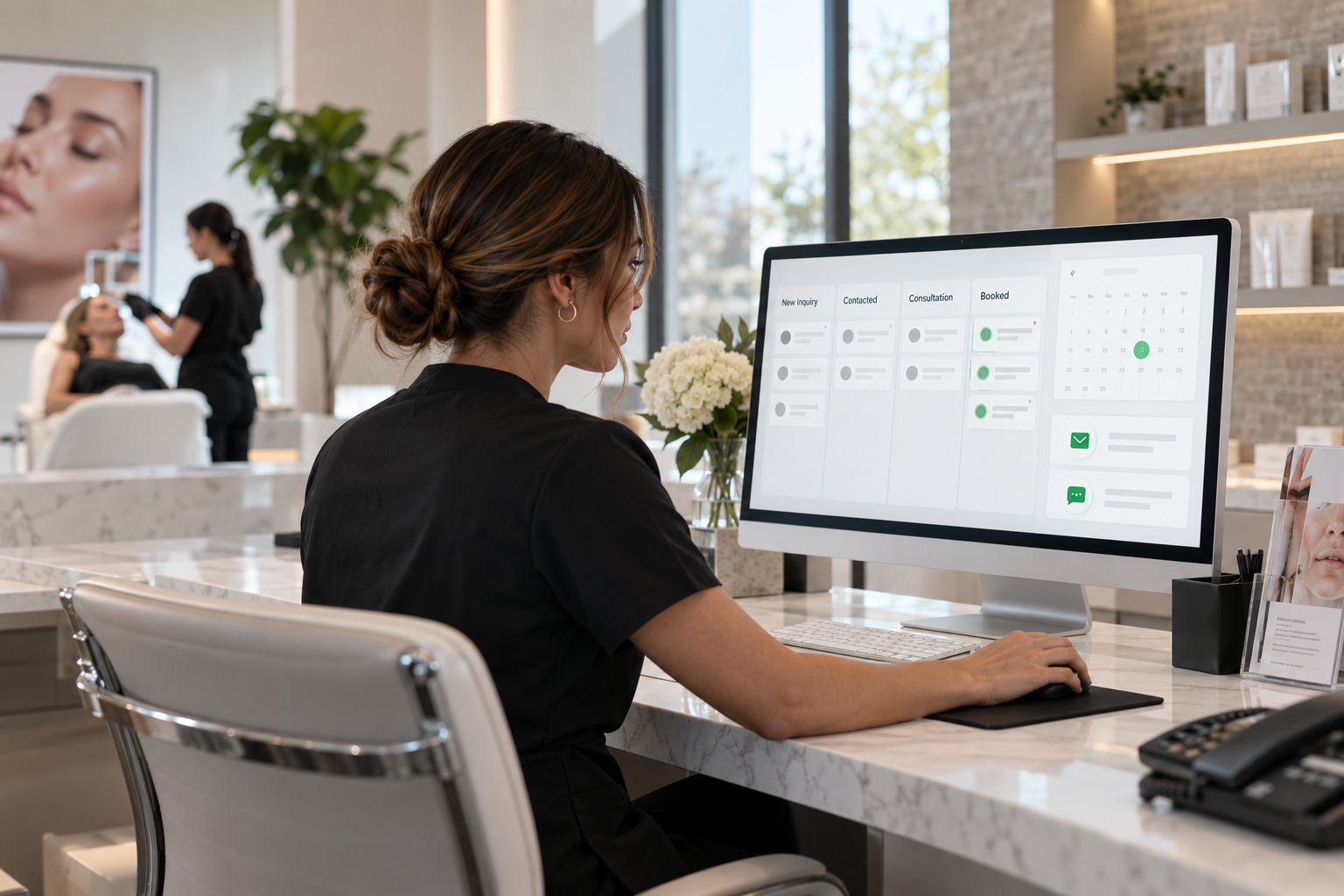
Assign these leads to a team member with a clear response deadline. The CRM should display the original inquiry, previous messages, lead source, and requested service so staff can continue the conversation without making the prospect repeat everything.
5. Confirm the Appointment and Reduce No-Shows
Once a consultation is booked, the workflow should move from lead nurture to appointment preparation. Send confirmation details immediately, followed by reminders based on your clinic’s scheduling policy. Include the appointment time, location, rescheduling instructions, and any approved preparation information.
If the prospect cancels or misses the consultation, trigger a respectful recovery sequence. A simple message offering a new booking link is more helpful than continuing to send promotional emails as if the appointment never existed.
6. Handle Missed Calls and After-Hours Leads
Phone inquiries often carry strong intent, but they are easy to lose when the front desk is helping an in-person patient. A missed-call workflow can send a consent-aware text, notify staff, and create a follow-up task. Clinics with heavy call volume can also evaluate AI voice agents for appointment handling, provided the system has defined escalation rules and does not give medical advice.
How to Keep Aesthetic Clinic Automation Personal
Personalization does not require pretending every automated message was typed individually. It means using known context appropriately. Segment workflows by treatment category, new versus returning patient status, lead source, and consultation outcome. Use the prospect’s name, but prioritize relevant content over superficial personalization.
Every automated sequence should offer a simple way to reach a person. Staff should also be able to pause automation when a live conversation begins. Otherwise, a prospect may receive a generic reminder while actively discussing a concern with your coordinator.
How to Implement the System
- Map the current journey. Document what happens after a form submission, social lead, missed call, and online booking. Identify delays and unclear ownership.
- Define pipeline stages. Useful stages may include New Inquiry, Contacted, Consultation Booked, Consultation Completed, Treatment Scheduled, Long-Term Nurture, and Closed.
- Create service-based templates. Write separate core messages for injectables, skin treatments, laser services, and body treatments. Have appropriate clinical and compliance stakeholders review them.
- Connect channels and calendars. Integrate forms, advertising lead sources, phone workflows, email, SMS, and booking calendars with the CRM.
- Set human handoff rules. Define which questions require staff review, who receives alerts, and how quickly the team should respond.
- Test every branch. Submit test leads, reply to messages, book and cancel appointments, opt out, and confirm that records move correctly.
For clinics that do not want to assemble these components independently, a done-for-you AI marketing automation system can connect lead capture, CRM stages, communication workflows, and staff notifications around an established process.
Metrics That Show Whether Nurturing Is Working
Track operational outcomes rather than judging performance only by message opens. Useful measures include speed to first response, contact rate, consultation booking rate, booking rate by lead source, no-show rate, rescheduling rate, opt-out rate, and the percentage of leads requiring manual follow-up.
Review performance by service and source. If paid social leads book differently from referrals, they may need different education or timing. If many prospects reply but staff responses are delayed, adding more automated messages will not solve the underlying capacity issue.
Common Automation Mistakes to Avoid
- Sending too many messages: More follow-up is not automatically better. Set limits and honor communication preferences.
- Using one sequence for every treatment: Different services create different questions and decision cycles.
- Automating clinical answers: Use trained professionals for medical guidance, candidacy, risks, and individualized recommendations.
- Ignoring compliance: Review applicable HIPAA, TCPA, state privacy, advertising, consent, and recordkeeping requirements with qualified advisors. The U.S. Department of Health and Human Services provides useful HIPAA marketing guidance.
- Failing to remove booked leads: Appointment status should automatically stop acquisition-focused messages.
Frequently Asked Questions
How quickly should a med spa respond to a new lead?
Send an immediate acknowledgment when consent and channel rules allow, then route the inquiry for prompt staff follow-up. Your target response time should reflect business hours, staffing, and the complexity of the request.
Can automation answer treatment questions?
It can provide approved general information about services, consultations, office policies, and scheduling. Questions involving medical suitability, risks, side effects, or personalized treatment decisions should be escalated to qualified staff.
Can this work with an existing CRM?
Often, yes. The key questions are whether the CRM can receive all lead sources, trigger workflows, synchronize appointment status, record consent, and assign tasks. If not, integrations or a more suitable platform may be needed.
Does every lead need SMS and email?
No. Use the channels the person has agreed to receive and respect stated preferences. Channel selection should be based on consent, urgency, service type, and engagement rather than sending every message everywhere.
Build a Better Path From Inquiry to Consultation
Med spa lead nurturing automation works best when it removes delays, preserves context, and makes the next step easy. The strongest system combines immediate communication with thoughtful education, clear staff ownership, reliable booking workflows, and appropriate human oversight.
Before adding more advertising, make sure your clinic can consistently respond to the leads it already generates. A well-designed nurture process gives your team a repeatable way to turn genuine interest into scheduled conversations without sacrificing the personal experience aesthetic patients expect.
Leave a Reply