
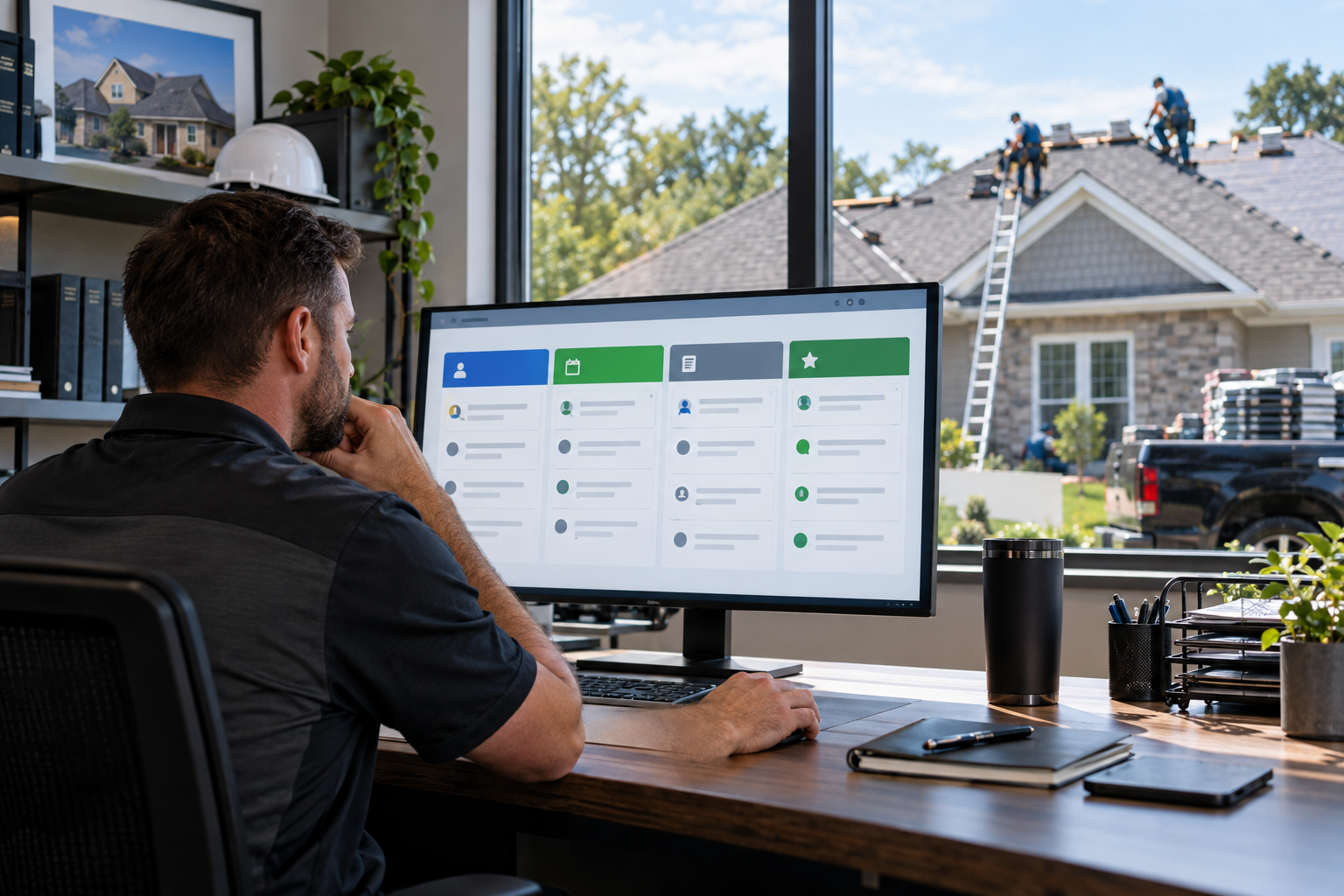
Roofing leads often arrive when your team is on a job, inspecting storm damage or driving between appointments. If the response is delayed, the homeowner may contact the next contractor on the list. Marketing automation for roofing companies helps prevent those opportunities from slipping through the cracks by connecting lead response, estimate follow-up and review requests in one consistent process.
The goal is not to replace personal communication. It is to automate predictable administrative steps so estimators, sales representatives and office staff can focus on conversations that require their expertise.
What Marketing Automation for Roofing Companies Should Accomplish
A practical roofing automation system should move a contact from inquiry to inspection, estimate, signed job and post-project follow-up. It should also make each lead’s status visible so the team knows who needs attention.
This typically combines website forms, call tracking, text messaging, email, calendars, pipeline stages and review requests. A properly configured marketing automation and CRM growth system can coordinate those components instead of leaving customer information scattered across inboxes, spreadsheets and individual phones.
For most roofing businesses, automation should support four priorities:
- Respond to new inquiries quickly and consistently.
- Make it easy for homeowners to schedule inspections.
- Follow up on open estimates without relying on memory.
- Request honest reviews after completed work.
Core Roofing Automation Workflows
1. New Lead Response and Inspection Scheduling
A homeowner who submits a form should receive an immediate confirmation explaining what happens next. At the same time, the lead can be added to the CRM, assigned to the correct representative and placed in a new-lead pipeline stage.
A basic roofing follow up automation sequence might include:
- An immediate text confirming that the request was received.
- An email introducing the company and outlining the inspection process.
- A scheduling link or prompt to reply with preferred availability.
- An internal notification for the assigned salesperson or office coordinator.
- A reminder if the homeowner has not scheduled within a defined period.
The messages should reflect the source and situation. A storm-damage inquiry may need a different response from a homeowner planning a routine roof replacement. Leads for repairs, commercial roofing or insurance-related inspections may also require separate qualification questions.
Phone inquiries need a plan as well. When missed calls are common after hours or during peak season, an AI voice agent for lead response can answer routine questions, collect project details and help schedule the next step. Calls involving emergencies, disputes or complex insurance questions should still be escalated to a qualified team member.
2. Roofing Estimate Follow-Up
Sending an estimate is not the end of the sales process. Homeowners may be comparing contractors, reviewing financing options, waiting for an adjuster or simply forgetting to respond. Structured roofing estimate follow up keeps the conversation active without forcing salespeople to remember every open proposal.
For example, an automation can send a brief confirmation after an estimate is delivered, followed by a helpful reminder several days later. A later message can offer to answer questions about materials, warranties, scheduling or the scope of work. If the homeowner replies, books a call or accepts the proposal, the automated sequence should stop and create a task for the responsible representative.
Good estimate follow-up is useful rather than repetitive. Messages can address common decision points such as:
- The difference between repair and replacement recommendations.
- Material and color selection.
- Project timing and preparation.
- Warranty documentation.
- Insurance paperwork, while avoiding promises about claim approval or coverage.
Every follow-up should identify the company, provide an easy way to respond and respect applicable communication preferences. Automation should never continue sending sales messages after a customer has declined or opted out.
3. Job Updates and Appointment Reminders
Marketing automation can also improve the experience after a homeowner says yes. Inspection reminders, contract notifications, material-selection prompts and pre-installation instructions can reduce confusion and inbound status calls.
The CRM stage can trigger the appropriate communication. Moving a project from “Estimate Accepted” to “Scheduled,” for example, could send a confirmation with the expected arrival window and instructions about vehicles, pets, gates or attic access. Internal tasks can remind the team to verify permits, materials or customer selections.
These updates should support operational systems rather than compete with them. If production scheduling already happens in roofing management software, data should be synchronized or responsibilities clearly defined to avoid conflicting messages.
4. Roofing Review Automation
Completed roofing projects create an opportunity to collect customer feedback, but the timing and wording matter. Roofing review automation can trigger a request after the team confirms that work is complete and outstanding service concerns have been addressed.
A simple sequence may send a thank-you message with a direct link to the company’s preferred review profile. If the customer does not respond, one courteous reminder can follow. Customers should be invited to provide an honest review rather than rewarded only for positive feedback.
Businesses should also avoid “review gating,” where satisfied customers are directed to public review sites while dissatisfied customers are filtered into a private form. For current compliance guidance, roofing companies can consult the Federal Trade Commission’s Soliciting and Paying for Online Reviews guide.
Negative feedback should create an internal recovery task. That gives the company an opportunity to understand the issue and respond professionally, but customers should not be pressured to change or remove a legitimate review.
How the Roofing Automation System Fits Together
Effective roofer marketing automation depends on clear pipeline stages and trigger rules. A typical pipeline might include New Lead, Contacted, Inspection Scheduled, Inspection Completed, Estimate Sent, Follow-Up Needed, Won, Lost and Job Completed.
Each stage should have an owner, an expected next action and a rule for when automation starts or stops. For example, an accepted estimate should immediately remove the contact from proposal reminders. A lost lead can be tagged with a reason, helping the company distinguish price objections from timing, service-area issues or projects that were not a fit.
Lead-source tracking is also important. Website forms, paid advertising, local listings, referral partners and inbound calls should be labeled consistently so management can evaluate which sources produce qualified inspections and sold jobs rather than looking only at lead volume.
Implementation Plan for a Roofing Company
- Map the current customer journey. Document what happens from the first call or form submission through project completion. Identify where responses are delayed, estimates stall or review requests are forgotten.
- Define pipeline stages. Use stages that reflect real decisions and handoffs. Avoid creating so many stages that employees stop updating them.
- Standardize contact data. Decide which fields are required, such as service address, property type, project category, lead source and assigned representative.
- Write short, specific messages. Texts and emails should sound like the roofing company, explain the next step and give the homeowner a clear way to respond.
- Build stopping conditions. Automations must pause when someone replies, schedules, accepts an estimate, opts out or moves to another relevant stage.
- Test every path. Submit test forms, make test calls and move sample contacts through the pipeline. Verify notifications, links, timing, mobile formatting and opt-out handling.
- Train the team. Employees need to know when to update stages, take ownership of tasks and replace automation with personal outreach.
Companies that lack the time or technical resources to connect these pieces can use a done-for-you AI marketing automation system to plan, build and maintain workflows around their actual sales process.
Measuring Performance Without Chasing Vanity Metrics
Automation should be evaluated based on operational and sales outcomes. Useful measures include lead response time, contact rate, inspection booking rate, estimate acceptance rate, average time spent in each pipeline stage, opt-out rate and review-request completion.
Track these by lead source and representative when appropriate. A high email open rate means little if qualified homeowners are not scheduling inspections or responding to estimates. Review the numbers alongside call quality, job fit, service area and seasonal demand.
Common Mistakes to Avoid
- Automating a broken process: Technology will repeat unclear handoffs faster; it will not fix them.
- Sending generic messages: Storm restoration, roof repair and planned replacement leads have different concerns.
- Failing to stop sequences: Proposal reminders sent after a contract is signed make the company look disorganized.
- Overusing text messages: Keep communication relevant and follow applicable consent and opt-out requirements.
- Ignoring human escalation: Complex estimates, complaints and insurance questions often need a real person.
Choosing the Right Roofing Marketing Automation Partner
Look for a partner that begins with workflow design instead of selling disconnected software. The provider should understand lead routing, pipeline management, estimate follow-up, call handling, review practices and the handoff between sales and production.
Ask how workflows will be tested, who owns the accounts and data, how employees will be trained and what happens when your process changes. The best system is not the one with the most features. It is the one your team can use consistently while delivering a responsive homeowner experience.
Frequently Asked Questions
Can marketing automation replace a roofing salesperson?
No. It can handle confirmations, reminders, task creation and routine follow-up, but a salesperson is still valuable for inspections, scope questions, objections and project-specific recommendations.
How often should a roofing company follow up on an estimate?
There is no universal schedule. Timing should reflect the project type, homeowner expectations and sales cycle. A small number of useful, well-spaced messages is generally better than frequent generic reminders.
Can roofing automation work with existing software?
Often, yes. Integration options depend on the CRM, estimating platform, scheduling system and available application programming interfaces. Confirm how data will move between platforms before implementation.
When should a review request be sent?
Send it after the project is complete and the customer has had an opportunity to raise service concerns. The trigger should come from a verified completion stage rather than an estimated date.
Is marketing automation useful for small roofing companies?
Yes. Small teams can benefit from consistent follow-up because employees often balance sales, production and customer service. Start with one or two high-impact workflows before adding more complexity.
Leave a Reply