Most appointment-based businesses do not have a lead-generation problem as much as a follow-up problem. Prospects call after hours, submit forms while the team is busy, ask one question and disappear, or intend to book but never complete the process. AI lead nurturing for appointment based business operations addresses those gaps by responding quickly, continuing the conversation, and guiding qualified prospects toward the next available appointment.
The goal is not to replace every human interaction. It is to make sure each inquiry receives timely, relevant attention without requiring employees to monitor phones, inboxes, and CRM tasks all day.
How AI Lead Nurturing for Appointment Based Business Works
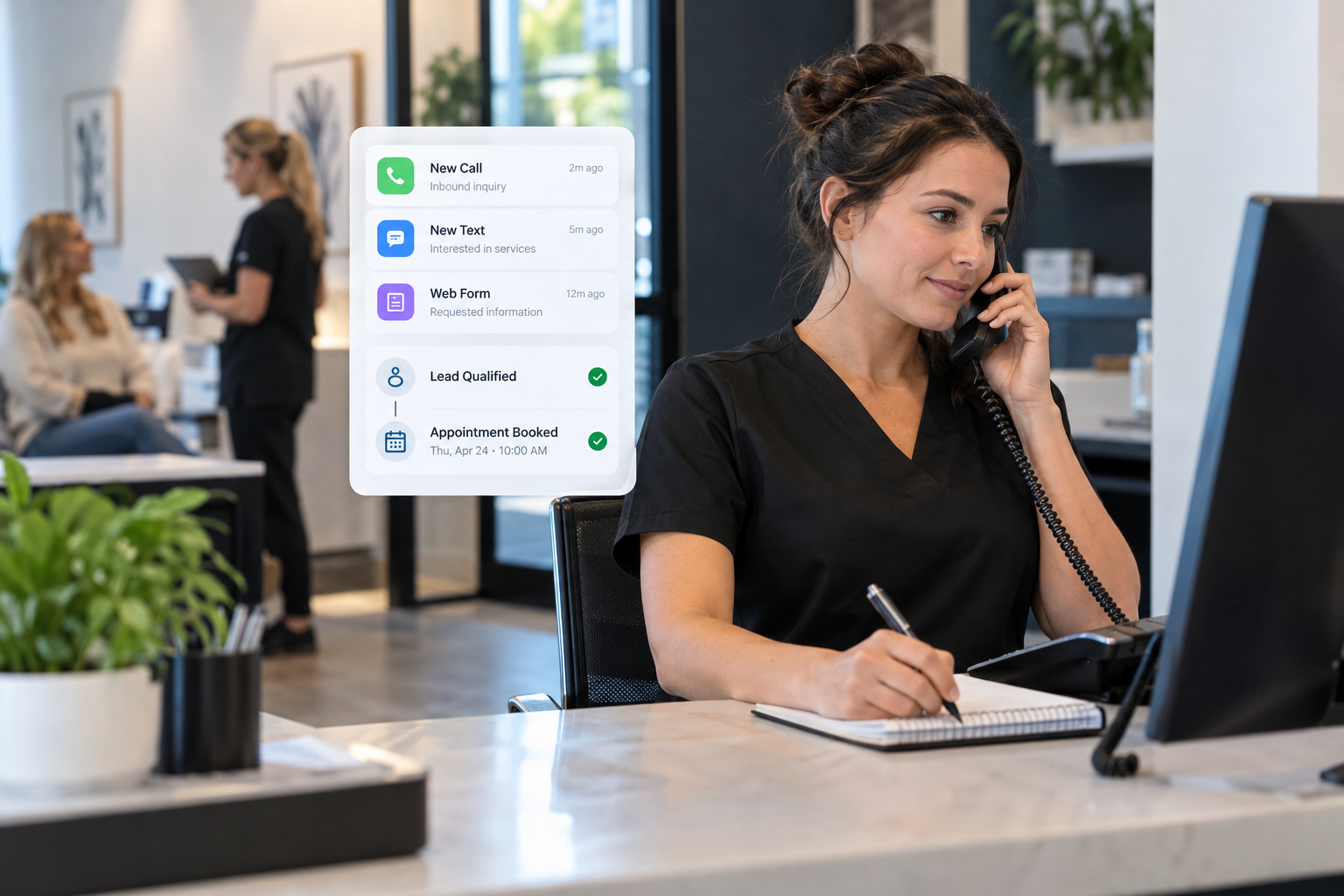
AI lead nurturing combines conversational AI, workflow automation, CRM data, text messaging, email, and sometimes voice technology. Together, these tools move a lead from initial inquiry to booked appointment while recording the conversation and alerting staff when human involvement is needed.
A well-designed system can recognize where a prospect came from, what service the person requested, whether the lead has responded, and which follow-up should happen next. It can answer approved questions, send a scheduling link, collect basic qualification details, confirm an appointment, and re-engage someone who stopped responding.
This is more useful than sending every prospect the same generic sequence. Effective appointment lead nurturing adapts to behavior. A lead who booked should receive confirmations and reminders, while a lead who clicked the booking link but did not schedule may need a short follow-up offering help.
Why Appointment Leads Slip Through the Cracks
Appointment decisions are often time-sensitive. A homeowner with a leaking pipe, a dental patient with tooth pain, or a prospect researching a legal consultation may contact several providers within a short period. If the first response arrives the next business day, the person may already have booked elsewhere.
Common conversion gaps include:
- Calls that go unanswered during jobs, lunch breaks, evenings, or weekends
- Website forms that enter an inbox without creating an immediate task
- Inconsistent follow-up after an estimate or consultation request
- No clear path from a marketing message to an available time slot
- Manual reminders that depend on an employee remembering to send them
- Old leads that are never contacted again
AI cannot fix an unclear offer, poor service, or an overloaded calendar. It can, however, create a consistent response process around those business realities.
A Practical Automated Booking Follow-Up Workflow
1. Capture and identify the inquiry
The workflow begins when someone calls, submits a form, starts a website chat, responds to an advertisement, or sends a text. The system creates or updates the contact in the CRM and records the source, requested service, location, and other available details.
2. Respond immediately
The lead receives a relevant first response through the appropriate channel. For example, a dental inquiry might receive a text asking whether the person needs a routine visit or urgent care. An HVAC lead could be asked for a ZIP code, system type, and description of the issue.
Businesses receiving frequent calls can also use AI voice agents for appointment handling to answer common questions, capture caller information, and support scheduling when staff members are unavailable.
3. Qualify without creating unnecessary friction
Qualification should collect only the information needed to determine the next step. A law firm may ask about case type and jurisdiction. A roofing company may ask whether the person owns the property and whether the request concerns repair, replacement, or storm damage.
Complex, sensitive, or high-value inquiries should be routed to a person. The AI should not improvise professional advice, make promises, or pressure a prospect into an unsuitable appointment.
4. Offer a clear booking path
Qualified leads can receive a scheduling link, suggested appointment windows, or a transfer to the front desk. Calendar rules should account for service duration, staff availability, service area, travel time, buffers, and appointment type.
5. Continue AI follow-up for appointments
If the lead does not book, the system can send a short sequence over several days. Messages should be useful rather than repetitive: answer a common concern, offer scheduling assistance, clarify what happens during the visit, or ask whether the person still needs help.
6. Confirm, remind, and recover
After booking, the workflow sends confirmation details and reminders. If a prospect cancels or misses the appointment, a recovery sequence can offer a simple way to reschedule. Once the service is completed, a separate workflow can request feedback or begin appropriate long-term follow-up.
Examples Across Appointment-Based Industries
Home services: A plumbing lead submits an emergency request at 9:00 p.m. The system acknowledges the request, gathers the service address and issue type, explains whether emergency scheduling is available, and routes urgent cases according to company rules.
Dental practices: A prospective patient asks about a consultation but does not book. The system answers approved questions about appointment preparation and available visit types, then follows up with a scheduling option. Insurance or clinical questions that require staff review are escalated.
Medspas: A lead interested in a treatment receives basic preparation information and an invitation to schedule a consultation. The workflow avoids making medical claims and transfers questions about candidacy, risks, or expected clinical results to a licensed professional.
Law firms: A prospective client completes an intake form. Automation confirms receipt, gathers limited screening details, and offers a consultation when appropriate. It does not provide legal advice or suggest that representation has been established.
What a Reliable Appointment Conversion Automation System Needs
Results depend on more than installing a chatbot. The supporting system should include:
- A centralized CRM with accurate lead stages and ownership
- Fast form, call, chat, and advertising lead capture
- Approved answers for common questions
- Scheduling rules connected to real calendar availability
- Channel-specific consent, opt-out, and quiet-hour controls
- Human handoff triggers for sensitive or unusual conversations
- Reporting from lead source through booked and completed appointments
Businesses that do not want to connect and maintain these components internally can consider a done-for-you AI marketing automation system that combines strategy, CRM workflows, messaging, and ongoing optimization.
How to Implement AI Appointment Nurturing
Map the current lead journey
Document each inquiry source, who responds, how quickly the response usually happens, and where leads tend to stop. Review calls, form notifications, inboxes, calendar activity, and existing CRM records. This exposes the specific gaps automation should address.
Define stages and ownership
Use clear stages such as new inquiry, contacted, qualified, booking offered, booked, completed, canceled, and unresponsive. Assign an owner and next action for every stage so automation does not create ambiguity.
Build one priority workflow first
Start with a high-impact process, such as missed-call text-back or follow-up for unbooked website leads. Test the wording, timing, routing, and calendar behavior before expanding to other channels.
Create boundaries for the AI
Specify what the system may answer, what it must not answer, and when it should escalate. Regulated industries need especially careful review. Messaging and calling workflows should also follow applicable consent and communication rules. The Federal Communications Commission publishes telemarketing and robocall guidance that businesses can review with qualified legal counsel.
Test real scenarios
Test during and after business hours, with new and existing contacts, and with incomplete or unusual answers. Confirm that opt-outs work, duplicate messages are prevented, appointments appear correctly, and employees receive escalation notifications.
Review conversations and improve
Early conversation reviews often reveal unclear service descriptions, missing FAQs, or scheduling rules that need adjustment. A properly configured CRM growth and automation system makes it easier to monitor the full journey instead of judging performance from message delivery alone.
Measuring the Business Impact
Track metrics connected to the appointment journey: time to first response, contact rate, qualification rate, booking rate, appointment completion rate, cancellation rate, no-show rate, and staff time spent on repetitive follow-up. Segment results by lead source and service type.
Also monitor quality. A higher booking rate is not helpful if appointments are poorly qualified or scheduled incorrectly. The strongest system balances speed, customer experience, calendar capacity, and lead quality.
Common Mistakes to Avoid
- Over-automating: Do not trap prospects in a workflow when they clearly need a person.
- Sending too many messages: Use intentional timing and stop sequences when the lead books, opts out, or is disqualified.
- Using generic scripts: Messages should reflect the service requested and the prospect’s actual stage.
- Ignoring calendar operations: Automation cannot compensate for inaccurate availability or unclear staff assignments.
- Skipping compliance review: Consent, disclosures, recordkeeping, and communication rules should be addressed before launch.
- Failing to maintain the system: Services, hours, staffing, offers, and FAQs change over time.
Frequently Asked Questions
Can AI lead nurturing book appointments automatically?
Yes, when it is connected to a properly configured calendar. Some businesses allow direct booking, while others use AI to qualify the lead before offering times or transferring the conversation to staff.
Will AI replace a receptionist or sales coordinator?
Not necessarily. AI is best used for immediate response, repetitive questions, data collection, reminders, and routine follow-up. Employees remain important for complex questions, sensitive conversations, exceptions, and relationship building.
How quickly should automated follow-up begin?
Usually as soon as the inquiry is captured, provided the channel, consent, and timing are appropriate. Later follow-ups should be spaced according to urgency, buying cycle, and customer expectations.
Can existing leads be added to a nurture campaign?
Yes, but the list should be cleaned and segmented first. Confirm that outreach is appropriate, respect previous opt-outs, and tailor the message to the lead’s prior interaction rather than treating the contact as new.
Build a Follow-Up System That Supports Your Team
AI lead nurturing works best when it is connected to the entire customer journey—not added as an isolated tool. The Digital Success builds done-for-you automation, CRM, booking, messaging, and AI call-handling systems for appointment-based businesses. The objective is a practical process that helps your team respond consistently, focus on qualified opportunities, and turn more valid inquiries into scheduled conversations.
Leave a Reply